Posted by: David Weimer | October 8, 2024

Shout No!

Trump Derangement Syndrome

Brainwashing.

Words don’t matter. Not one bit.

Here’s an experiment for any Trump follower. Find a Trump video and watch it with the sound turned off. Without the mesmerizer’s voice, you’ll feel an overwhelming compulsion to turn the sound back on because there’s something really wrong with the muted experience.

To understand Trump Derangement Syndrome, go online, Google Trump, and listen to several minutes of him talking at a rally or giving a speech. After a while you’ll shake your head, blink several times, and reach for the mute button, wondering what happened. The man speaks a steady stream of nonsense, while all the while intending to get into the woman’s pants next to him. Keep her attention, keep talking. Keep their attention….

When Trump’s subjects are pliable and unresisting, he can do whatever he wants. He gets, and keeps, the attention of his followers by flashing shiny red meat objects to them, saying “crooked” this person, “build the wall,” and “mass deportations.” Then he drones on and on, using a cult leader’s repetitive droning….

Trump drones on and on to keep the listener’s attention on him. He’s a manipulator. He’s a middle schooler who shows classmates porno images. He knows what grabs attention. Naughty. Nasty. Outrageous. He could care less about the truth; he lies constantly because he’s improvising, feeling his way, and working to get his listeners’ attention. Whether you love him or hate him doesn’t matter. Simply focus your attention on the outrage he’s dangling, while he drones on and on….

The things that Trump says are purposely ridiculous, extreme, and outrageous because they have to be. His power over his listeners is saying something outrageous because that’s quite simply what grabs a listener’s attention. Rally crowds let him know when he has them. He says something outrageous, or he swears—and once he gets their reaction his droning, droning, droning can continue. His red-hat-wearing listeners nod, eyes glazed and jaws slack. A tried-and-true hypnotist’s technique is to wear down listeners before giving them suggestions.

Ironically, Trump followers seem to think it’s clever to label non-Trumpers as being afflicted with Trump Derangement Syndrome. With Trump’s followers—who mirror his behavior—the most honest things ever uttered are projections. “I’m not deluded, you are.”

Trump’s droning, droning, and droning is to lull you into allowing him to do what he wants to you. Although they cluck like chickens and play broomsticks like guitars on stage, the brainwashed should never be mocked. Blame the hypnotist.

And shout, “No!”
Posted by: David Weimer | October 6, 2024

Doing What I Can

Do what you can, where you are, with what you have.

This philosophy resonated in my mid-twenties when I first heard it. I’ve used it ever since, whenever I want to accomplish something.

Hopefully, my sons can use this versatile tool to reach their own goals.

You have to make a living. You have to get somewhere. You’re never as experienced as you will be after decades of failure and success, but you can’t wait until then. So you do your best, using what you have. Over the decades, I’ve accomplished tasks great and small, using what I had.

I’ve built decks, remodeled kitchens and bathrooms, installed doors and toilets, and refinished floors. I’m a self-employed contractor. I used to paint wooden houses each summer. Some projects were huge and I didn’t feel confident, but I took them on because I had to provide for my family, so I swallowed nervously, and began, doing my best each day.

Now, I’m writing essays. It’s something I can do.  

Our fragile blue marble is important. Transitioning to renewable energy is a priority for me because I care about my sons’ lives and their future children. Worsening storms, heat, and floods are a clear danger to my descendants. It’s not theoretical. Neither are tornados, triple-digit temperatures, nor assault weapons.

I see a big red train charging toward a cliff, while its flag-waving passengers shout, “Revolution!” and “Civil war!” brandishing assault rifles. What can be done?

It’s daunting. I try to convey to my sons the importance of voting blue in this coming election and my twenty-year-old is leaning toward the red hat and long red tie brigade while my older son seems apathetic.

A need for responsible governance, the worsening climate crisis, and a serious threat to civility are all on the ballot this November. I hope one other adult besides me in this big American room casts their ballot for the blue side this time around.

Please vote blue across the board. More American adults don’t have the current form of rabies going around. If we say “No,” then the extreme candidates conducting the train toward the cliff will be culled from the political herd.

Rejection of the madness might help.

Vote.

Posted by: David Weimer | October 2, 2024

Everything we take in, or do, affects us.

Drinking alcohol, coffee, or water.

Breathing air, burning tobacco, or THC-laden smoke.

Watching Fox News or MSNBC 24/7.

Reading books.

Scrolling through TikTok or Facebook for several hours each day.

Listening to far-right talk radio, progressive podcasts, or music all day while at work or while commuting.

Walking outside in nature with no devices.

Exercising.

Meditating.

When I was a child, a teenager, and a twenty-year-old, I thought everyone saw the agreed-upon reality that I did. Once in a while, I’d encounter someone really “out there” and shake my head. Now, everyone seems crazy when I hear them voice what they think.

Who’s right?

I just watched a 2015 documentary, “The Brainwashing of My Dad.” The man featured in the film had been a young person during the great depression. During long commutes to work, he began to listen to right-wing radio talk show host, Rush Limbaugh. More and more, he became immersed in the three-hour daily shows. When Fox News came along, he became an avid watcher. He also received emails from right-wing think tanks and advocacy groups like the Heritage Foundation, which he forwarded or printed to mail to family members.

The man’s daughter, who made the documentary, described a nice man’s transformation into a bitter, angry, xenophobic, misogynistic, intolerant asshole. She had video footage of him before, during, and after. She featured testimonials of other people like herself, who had close family members who had become radicalized and unrecognizable.

Long after he retired, when the radio the old man listened to broke, he quit listening to Rush Limbaugh and spent more time talking with his wife during meals. When his old TV broke, his wife programmed the remote for the new one and they watched other channels besides Fox News. His permanent scowl began to fade. The steady stream of emails from online right-wing advocacy groups changed when his wife unsubscribed him from those groups and subscribed him to objective news and progressive information sites. He still read his daily emails, but they were different.  

When his diet changed, so did he. He became the happier, loving family man that he had been before starting to nod along with Rush Limbaugh. He died in 2016.

What is the lesson? I am affected by my media diet. I am not so dissimilar to the dad in the documentary. The old man’s story is a cautionary tale. To me, or to anyone.

Was the stuff that he believed when he was angry and outraged right? What does it matter? If you’re hating your fellow Americans, you’re not likely to agree to work with them to accomplish anything.

Is Donald Trump a cult leader? He quacks, looks, and walks like a duck. He’s quacking incessantly into a megaphone with wires stretching to TV, radio, cable, and internet stations and websites pumping out propaganda. Millions of neighbors, co-workers, fathers, uncles, and brothers are consuming a steady, multiple-hours-a-day, diet of high-octane outrage.

Propaganda engages our anger. Someone is profiting, and it’s not us. Propaganda doesn’t inspire us to work with others to solve problems. A united couple works together to face life. A divided couple gets divorced. We can accomplish anything—together. Divided… not so much.

Look up Project 2025. I hope you vote accordingly in November.

Posted by: David Weimer | September 26, 2024

Immigration, Leadership, and the Big Picture

War and strife within a nation and between nations or other groups of people is a cause of migration. Increasing temperatures and rising sea levels are other menacing causes of migration. Perceived “greener grass” in other geographic areas is a cause of migration.

The Neanderthals probably had an opinion on immigration (look it up if you don’t know what I’m referring to :)). Immigration has always been a “problem” for someone. With climate change and increasing global human population, it will get worse and it seems obvious that we need to be able to address it responsibly. Humans, like all the rest of the animals, have instinctively strong reactions to “strangers” for good reasons. Competition for resources is a big deal.

We should open our doors to all others. We should never harm any living being. We should label immigrants as vermin and criminals and dehumanize them.

Donald Trump talks a lot about sharks. Sharks eat other animals, including us. Almost everything he says stokes our instinctive fears. An extreme reaction to a perceived threat is easy, but being a responsible adult isn’t.

In 1859, Charles Dickens wrote: “It was the best of times, it was the worst of times, it was the age of wisdom, it was the age of foolishness, it was the epoch of belief, it was the epoch of incredulity, it was the season of light, it was the season of darkness, it was the spring of hope, it was the winter of despair.”

The best and worst are in us. We can be encouraged to feel and express the best or worst in reaction to a situation. In other words, we are influenceable.

The best of us acknowledge mistakes and work to improve things that have been done imperfectly. This is how spaceflight succeeded. We wouldn’t have the view of a beautiful blue marble without this methodology. Working to form “a more perfect union,” is written in the preamble to our Declaration of Independence, which was written during imperfect times. I want my leader to embody the best that (I hope) I have in me.

Donald Trump, like the rest of us, is an animal.

He is also a bad leader because he works to turn those around him against each other, surrounding himself with “like-minded” fellow animals who feel strongly that strangers and enemies must be hated, dehumanized, marginalized, or killed.

I don’t want my leader to represent my worst impulses. I want them to be better than I can be when my neighbor’s music is bothering me. A competent leader should be able to understand the motivations of both our group and other groups. They should have a big-picture overview. I think a good leader should make the best decisions possible for everyone who will be affected.

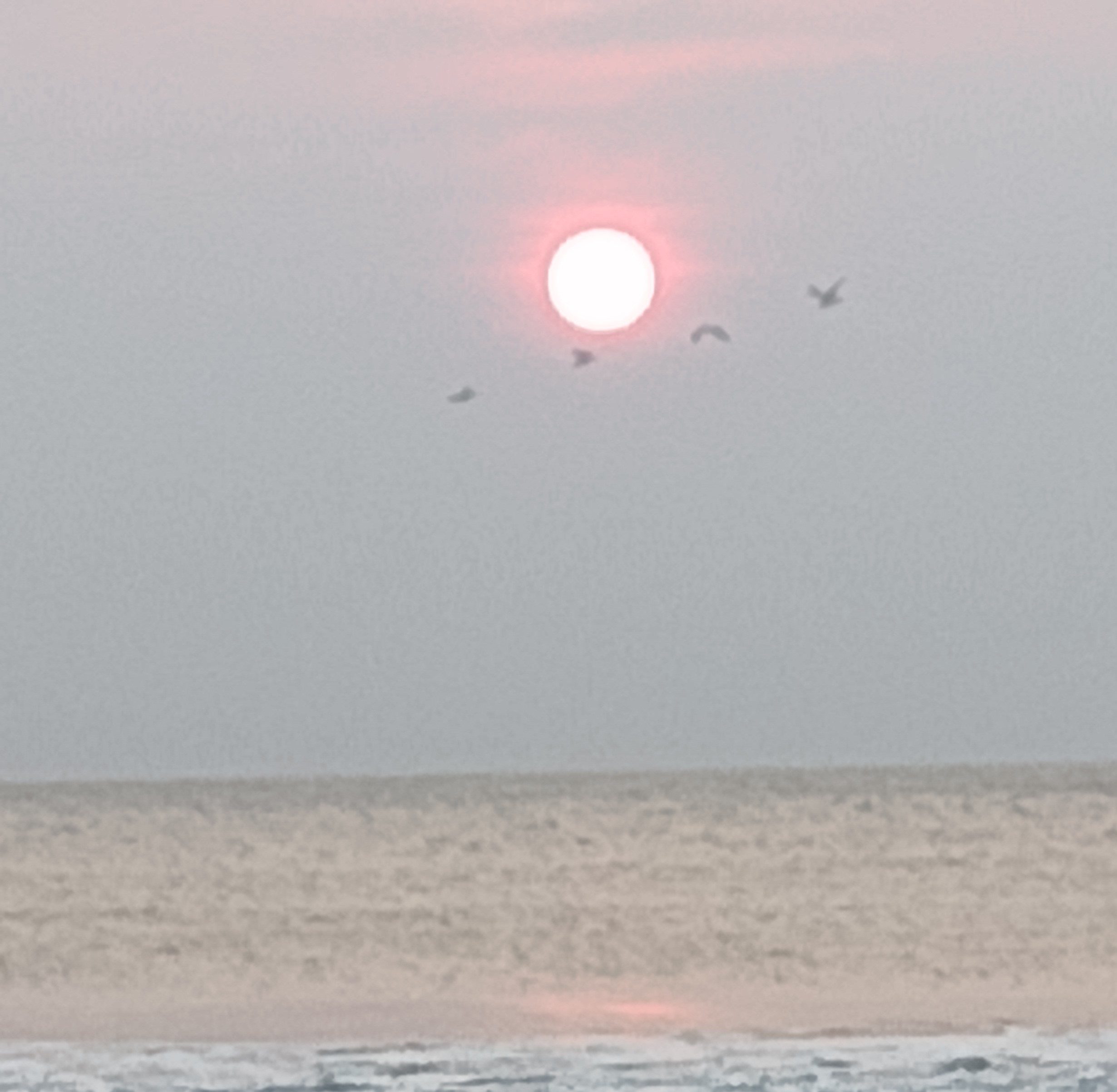
In my living room, drinking my morning coffee at eight a.m. on a Sunday, feeling my next-door neighbor’s pounding music shake my house, the moment doesn’t feel that perfect.

Human nature is why we’re here and why countless millions of others and many other species aren’t. From a survival standpoint, our nature works. When wolves eat our sheep or cattle, we kill them. When termites eat our floorboards, we kill them. When Native Americans attack a fellow settler, we kill them. Perceived threats to oneself, one’s livelihood, family, home, or community, are vigorously responded to. History is replete with massacres committed by you and me in previous generations.

Xenophobia is the fear and hatred of people who are perceived as different in nationality, ethnicity, race, or religion. It is also a dislike of anything perceived as foreign or strange. Xenophobia is our reaction to “others.”

“War is hell,” has been said by those who have been there. Through their feelings of anger and fury, humans do so much more than kill.

Interrupt my morning coffee with pounding music, and after a few times of this happening, overwhelmed with resentment, my blood boils. My smile is automatic and effortless when I watch a child on the beach playing in the sand. My reactions are fundamental to my nature. Our collective reactions have allowed us and our ancestors to survive.

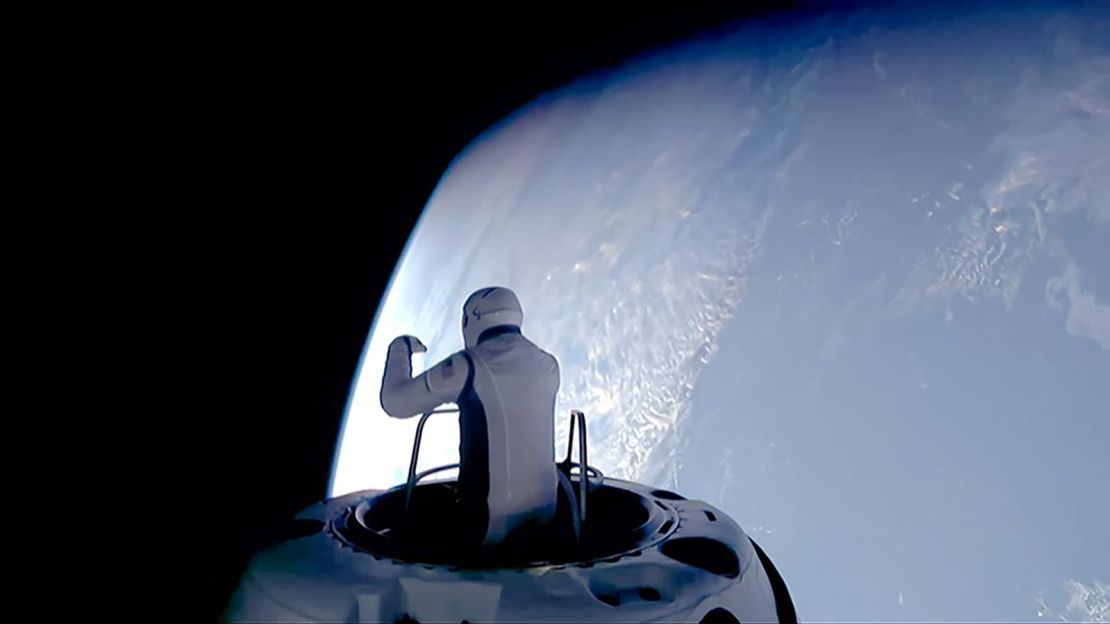
From orbit, our planet looks peaceful and perfect. Let’s pick a good leader.

Posted by: David Weimer | September 26, 2024

Essays in Futility

Not really futility, but it feels that way.

I’m going to post essays here, where nobody will see them, probably, because it’s something I can do. So I’m going to do it. Until the November election.

Posted by: David Weimer | February 11, 2024

tHe Excerpt

Chapter 10

Sailing is both being pushed and pulled towards one’s desires.

His shorts were wet where they contacted the driver’s seat. And itchy. At the next emergency pull-over, he wiggled out of his shorts and underwear and pulled on a dry pair of tan cargo shorts, zipping the fly carefully. One of his towels, folded, was between him and the now-wet seat. His wet clothes had joined the shoes and socks on the passenger side floor.

His driving sunglasses blocked some of the intense white-blue glare. He tapped the edge of the car door. Wind increased as he accelerated to highway speed. On the radio, Elton John sang, “Don’t let the sun, go down on me; although I search myself, it’s always someone else I see.…” Daniel sang with him, tapping his fingers on the door. Sun. Wind.

The fact was, the sun stood still and the Earth, seeming still, was moving fast around it, like always. Relative to the galaxy, the entire solar system, including the sun, was moving around its center. Within the solar system, though, the sun was motionless, although it moved relentlessly across the sky. Maybe it was the movement of his car, the lack of trees, hills and buildings…. Everything seemed bigger, fuller, and stiller. Maybe it was the low horizon and the ocean.

Flat. Open. Water in every direction. Daniel’s Nissan wagon pushed through the wind, on a roadway floating over the ocean, sailing away from the mainland and his past. Eighteen years, fading behind him.

A sign, Islamorada, Florida, flashed by. The Overseas Highway lead southwest over sparkling water. An umbilical of power poles to his right kept pace with his car. The water couldn’t be that deep because the concrete roadway supports had to rest on something. It was like the highway was tracing the back of a sea monster. It looked deep. A lone Jet Ski approached from an angle ahead, its rooster tail of water shooting skyward as it skipped over small waves. Two bicyclists flashed past, pedaling north on the edge of the roadway. The day seemed longer here with nothing to get in the way of the sun. Everything felt motionless. Well onto the islet of Islamorada, a fish hook-shaped key, Daniel rolled to a stop in a sandy asphalt parking lot at Mr. Lobster: Fish Market & Marina. There was a narrow beach between the highway and the eastern ocean. He flipped his sun visor up, got out and stretched, then jogged across the road, following a twenty-foot-long path through scrub grass to reach the ocean, where he stood on a pebble-strewn patch of sand peppered with debris and seaweed. A large, worn log pointed out to sea. There were almost no waves, which surprised him because he’d always imagined there would be surf everywhere there was ocean and shore. The concrete power poles behind him marched in both directions along a narrow strip of ‘dry’ land. There were traffic sounds behind him. The sun was going down over there, behind some palm trees. A breeze from the open expanse of water cooled his sweating face. He knew The Bahamas and Cuba were in that direction, beyond the visible horizon. The waning sun warmed his right shoulder and ear. He couldn’t see anything but water out there.

Posted by: David Weimer | May 12, 2023

A Call for Readers:

tHe, my first novel and fifth book, needs “test audience” readers at this proofreading/copyediting stage.

If you’re a willing reader, you can be part of polishing a book for publication–just by reading and giving your honest reactions!

If you’re interested, let me know.

Thanks 🙂

Posted by: David Weimer | April 17, 2023

tHe, (first novel & fifth book) Chapter 1 Excerpt

tHe

Chapter 1

Right.

Right right right right right right right right right right right right right right right right right right rightrightrightright.

Ridiculousness meaninglessness. One word in a forest of itself is meaningless. In a row, all in a row is nothing, really.

Gently.

Merrily.

Merrily, merrily, merrily, merrily, life is but a dream. This most profound, meaningful statement any human mind has ever expressed is embedded in a song we instantly “know” to be meaningless ridiculousness….

Each twenty-year cycle on our planet, within our human species, is a generation, responsible for all innovation, style, and new things—like each spring’s leaves—triumphantly oblivious of the humus of countless decomposed forbearers beneath them.

This moment of periodicity is perceived as a self-evident reality by the newly-arrived swimmers in their part of this stream’s current, to utilize another metaphor. A species of beings with a much longer or much shorter generational period would appear correspondingly “different” from us and our often unexamined generational pattern, which we “know” to be what is, and, is simply—real.

Sanity is a fickle rat with a fixed view of events inside itself and without—without which, nothing Is. Who is sane? Please—point; no, it’s not rude…. An automatic answer is: a sane person does no harm to themselves or to others.

How can I know what you mean by that? I don’t … I can’t. Can you know what I mean? Can you say something without comparing what you say to something else? Is reality only relativity? Is relativity all there is? Largely… yes. How “right” are you? Actually? Can this be discovered? By anyone? If you are right, what does right mean to anyone else? To someone not right? What is your reality compared to a thousand-year-old, somehow still standing, dead tree on another planet in another galaxy or to one of uncounted myriad fossilized dinosaurs in New Mexico’s desert?

“Right,” you nod, sagely.

The boy had some time before the two adults in the house he lived in awoke. He had selected a handful of cold rocks from the side of the road as birds flapped overhead, feet tucked into their belly fathers, bodies streamlined, necks outstretched. His long morning shadow eased slowly ahead of him. His breath steamed. The boy’s left hand gripped a single rock.

He walked on the cracked sidewalk past houses with cars in driveways, bikes on their sides in yards, with portable basketball nets and scooters left leaning against bushes. After two intersections and more than twenty houses, he came to the old worn-out single-wide trailer. A faded, algae-covered red car perched precariously on four jack stands in the sloped asphalt drive. The fourteen-year-old boy crouched to peer under the car. All the wheels were still on, surprisingly, and rusted parts, just lumps under leaves, really, were lined up on the edge of the asphalt driveway, partially concealed by tall, unmowed grass growing there. He felt certain that the car would fall easily over if he pushed it slightly in the downhill direction.

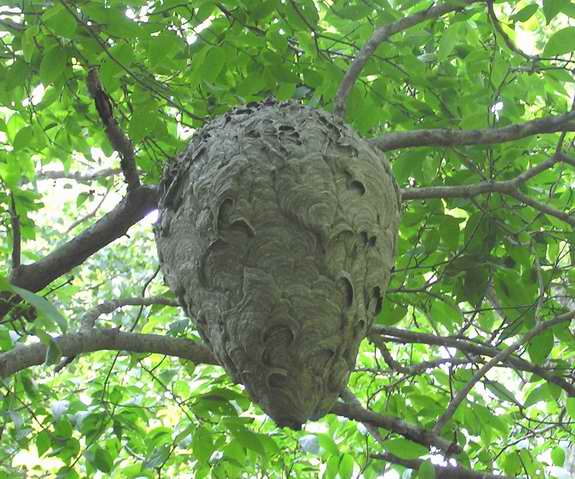
Examination over, he stood and resumed walking. After the trailer’s overgrown yard, a tall leaning tree stood twenty feet in, past the wide, deep drainage ditch. He jumped over the ditch, which was free from water for now, though the grass was dewy and almost frozen. His footprints followed him into shin-high frost-covered grass. The pale, dark-haired boy looked up at a large branch where a mottled grey elongated globe, almost hidden by leaves, loomed. Lingering predawn stillness was giving way to a slight breeze as the sun crept higher over the horizon. The uppermost leaves in the tree were already bathed in the morning light; those around the hornet’s nest were still in darkness. He didn’t see any flying hornets, but that probably wouldn’t last.

Posted by: David Weimer | February 5, 2023

tHe, by David W. Weimer, is (almost) here.

Just finished a project that turns out to have taken about eight years. My first novel and fifth “book,” is in readable manuscript format. I might post some excerpts here at times, but right now my test readers are checking it out for the first time it’s been out in the world and out of solely my head.

Here’s the front and back cover:

Posted by: David Weimer | November 23, 2015

Novel in the works

I’m working on a novel-length story.  Its title is THe.  

Here’s an excerpt from Chapter One of the working manuscript:

hornet

THe

The nest was too high for him to throw a stick accurately at it, he thought.  Rocks would be better.

The boy thinks briefly about those he left sleeping in the house.  He thinks about the hornets inside the nest above his head.  And how now doesn’t really feel like a family, and how the hornets scare him.  He couldn’t explain if you asked why he wanted to throw rocks at the nest.  He was careful enough to do it in the morning, though, so he wouldn’t be stung by hornets looking for the source of the destruction of their carefully-constructed suspended home.

He’d had other destructive impulses like this.  Stomping on the ice of some deep ruts in a dirt road, where ice had formed and a wide, hollow gap between the ice and the water below was hollow and reminded him of breaking glass when he broke through the ice.  Throwing rocks at an old abandoned car in the woods, stones clanking metallically as he struck the rusted passenger side door.  Kicking a football as high as he could in the backyard of a foster family he’d been with before.

He threw the rock.  It missed left, and too high.  He’d thrown it as high as he could.  He goes back to the ditch along the road and searches for more rocks of the right size.  He finds gravel there, and fills his hands, walking back to his throwing distance place. He makes a small pile there.  He throws up another, smaller, rock, missing low this time, although right on target.  A third rock has a good feeling. Its weight is right.  It’s the one.

He cocks his arm, rock held behind his head, and looks at the spherical paper nest.  This is the last time he would see it intact.  He looks down at a second rock held in his right hand.  Destruction is the way of everything, he knew.  Things were permanent, then they change.

Undoing permanence was why he was here.  Exactly the reason.  Give in. Throw.  Or hold off… and let something else do the throwing—a boy, the wind, a branch, rain… time.  He didn’t think any of this, but he knew it through and through.


« Newer Posts - Older Posts »

Categories